


What Is the Difference Between a Comprehensive Eye Exam and a Vision Screening?
Many people assume a vision screening is enough to monitor their eye health. However, there are significant differences between a vision screening and a comprehensive eye exam. At Atlas Eye Care & Eyewear, we believe patients should understand how each works so they can make informed decisions about protecting their sight.
What Is a Vision Screening?
A vision screening is a brief test designed to identify obvious vision problems. These are commonly performed at schools, community events, or primary care offices. The goal is to flag potential concerns that may require follow-up care.
Vision screenings typically:
- Measure distance visual acuity using a standard eye chart
- Provide a simple pass or fail result
- Take only a few minutes to complete
While screenings can detect some refractive errors such as nearsightedness or farsightedness, they are very limited in scope. They are commonly conducted by individuals who are not trained in eye health and are not qualified to diagnose eye diseases. In addition, screenings rely on limited, basic equipment that does not allow for a detailed evaluation of internal eye structures or early signs of medical conditions.
Because of these limitations, someone can pass a vision screening and still have underlying eye health issues. A screening is simply a preliminary step, not a replacement for a comprehensive eye exam performed by an optometrist.
What Is a Comprehensive Eye Exam?
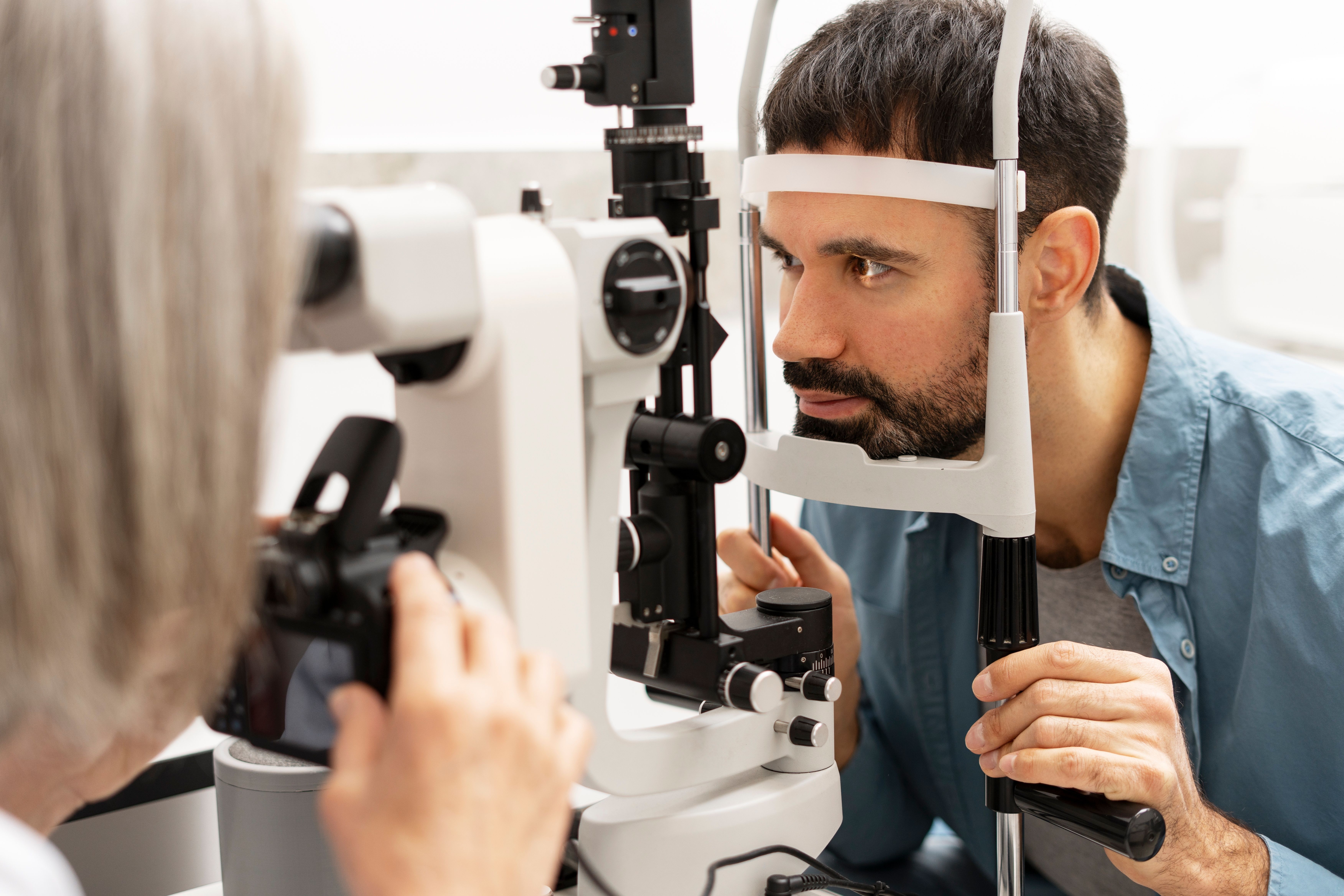
A comprehensive eye exam is a thorough evaluation performed by a licensed optometrist. It assesses not only how clearly you see, but also the overall health and function of your eyes.
During a comprehensive eye exam at Atlas Eye Care & Eyewear, we evaluate:
- Visual acuity and determine an accurate prescription
- Eye focusing ability and coordination
- Peripheral vision
- Eye pressure to screen for glaucoma
- The retina and optic nerve for signs of disease
- Early indicators of cataracts, macular degeneration, and diabetic retinopathy
Comprehensive eye exams can also reveal signs of systemic conditions such as diabetes and high blood pressure. These exams are tailored to your age, medical history, and specific risk factors.
Why a Screening Is Not a Substitute for an Eye Exam
Vision screenings are helpful as an initial check, especially in school settings. However, they are not diagnostic. They cannot detect many eye diseases that develop without symptoms in the early stages.
Conditions such as glaucoma and macular degeneration may progress silently. Without a comprehensive eye exam, these diseases can go undetected until vision loss has already occurred.
A comprehensive exam provides early detection, accurate prescriptions, and a full understanding of your eye health. It is the standard of care for maintaining long-term vision.
How Often Should You Have a Comprehensive Eye Exam?
The American Optometric Association advises adults between the ages of 18 and 60 to have a comprehensive eye exam at least every two years if they are not experiencing any vision concerns. For adults 61 and older, annual comprehensive eye exams are recommended, or more frequently if advised by your eye doctor based on your individual eye health needs.
See the Difference Comprehensive Care Makes
Because Vision screenings are conducted by individuals untrained in eye health and rely on limited equipment, they cannot replace the thorough assessment provided by an eye doctor. Protecting your eyesight requires more than a simple screening. It requires comprehensive care.
If it has been two years or longer since your last eye exam, or if you’re experiencing any vision concerns, schedule a comprehensive eye exam at Atlas Eye Care & Eyewear. Visit our office in Woodbridge, Connecticut, or call (203) 204-8955 to book an appointment today.

All Eye
Care Services

Keep
In Touch
MAP
© 2026 Swift Eye Care, PLLC. All rights reserved. DBA Atlas Eye Care & Eyewear
Located in Woodbridge, Connecticut. Accessibility Statement - Privacy Policy - Sitemap
Located in Woodbridge, Connecticut. Accessibility Statement - Privacy Policy - Sitemap
Powered by: 